
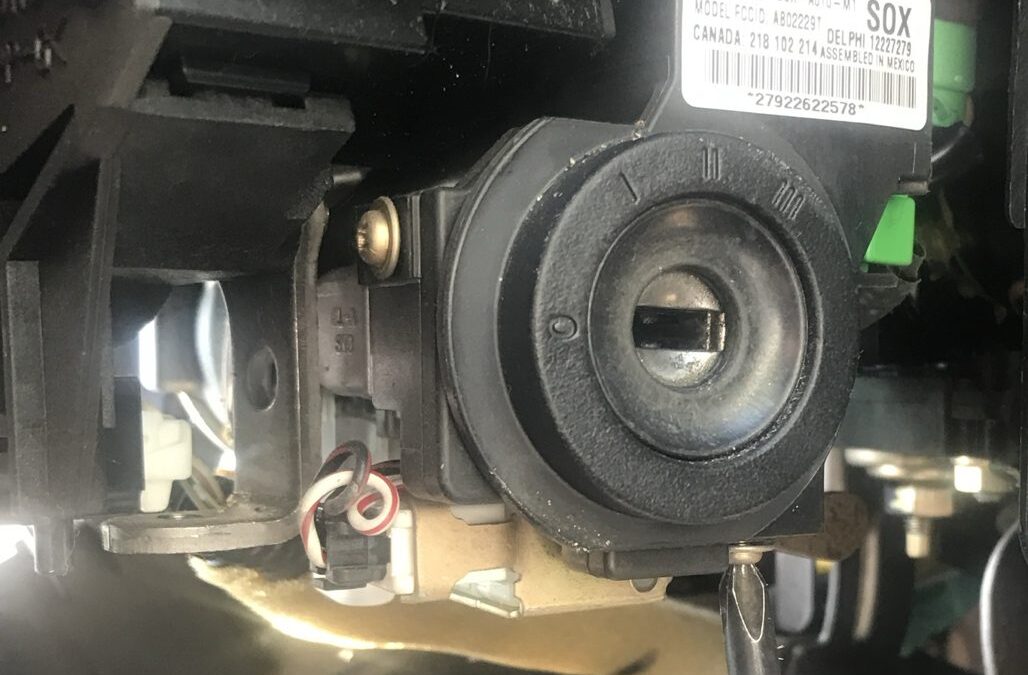
The key goes in, but it will not turn. Or it turns only after you jiggle it. Or it turns, the dash lights come on, and the engine does nothing. Ignition trouble usually starts small and gets worse until one morning the car will not start at all. This guide explains what is going on inside the ignition, what you can safely check yourself, and when a mobile locksmith can fix it at your car without a tow.
Is It the Ignition, the Battery, or the Starter?
Three different parts get blamed for a car that will not start, and they fail in different ways. A quick way to tell them apart:
- The ignition cylinder is the lock your key goes into. When it wears out, the key sticks, will not turn, or will not come out. The car itself may be perfectly healthy.
- The ignition switch is the electrical part behind the cylinder. When it fails, the key turns normally but the dash lights flicker, the radio cuts out, or the engine will not crank.
- The battery or starter is the problem when the key turns easily, the lights are dim or dead, and you hear clicking or nothing at all.
If the key itself is the part that will not cooperate, the cylinder is the suspect, and that is the repair we do at your car.
Signs the Ignition Cylinder Is Wearing Out
- The key goes in but you have to wiggle or jiggle it to turn it.
- The key sticks in the ignition and is hard to pull out.
- The key turns only part of the way, or only in certain positions.
- The steering wheel stays locked even when the key is in.
- A brand-new copy of your key does not work any better than the old one.
- The car starts sometimes and refuses other times, depending on how the key sits.
Any one of these can be a one-time fluke. Two or three together mean the cylinder is on its way out, and it will not heal itself.
Try These Quick Checks First
Before you call anyone, a few thirty-second checks rule out the simple stuff:
Wiggle the steering wheel. The steering lock engages when you turn the wheel after shutting the car off, and it can pin the key in place. Turn the wheel gently left and right while you turn the key. If it frees up, that was the cause.
Try your spare key. If the spare turns smoothly, your main key is worn. A worn key and a worn cylinder wear each other down, so it is worth knowing which one you are dealing with.
Check the shifter. Automatics need to be fully in Park, and some will not release the key otherwise. Push the shifter firmly into Park and try again.
Push-button cars: if your car starts with a button, there is no key cylinder to worry about. A car that will not detect the fob is usually a weak fob battery. Hold the fob right against the start button and try again. If that does not work, see our page on car key replacement.
Why Ignition Cylinders Wear Out
Many ignition locks work with small metal wafers or pins that line up when the right key goes in. Over years of use, those parts wear, and so do the cuts on your key. Once both are worn, the key stops lining everything up cleanly and starts to bind. Several things speed this up: a heavy key ring hanging off the key while you drive, dirt and grit working into the lock, and simply decades of daily use. Forcing a stuck key makes it worse, because it bends the key and chews up the wafers.
This is also why a copy made from a worn key often does not help. The copy inherits the wear. A key cut fresh from the key code, to factory specs, is a different story.
What Not to Do
- Do not force the key. If it snaps off in the ignition, a simple repair becomes a harder one.
- Do not soak the lock in oil or heavy spray lubricant. It attracts dust and gums up the wafers. A small puff of dry graphite or a lock-specific lubricant is the most you should use.
- Do not keep driving on a failing ignition. If the cylinder stops turning at a bad moment, you are stranded wherever you are, and in July in Phoenix that is a bad place to be stranded.
What a Locksmith Can Do at Your Car
A worn ignition does not always mean a new part and a tow to the dealer. We come to you, take the ignition cylinder apart, and rebuild it with fresh parts, keyed to match your existing key so the same key still works your ignition and your doors. If your key is also worn out, we cut a new one to factory specs from the key code rather than copying the worn one. Then we test everything before we leave.
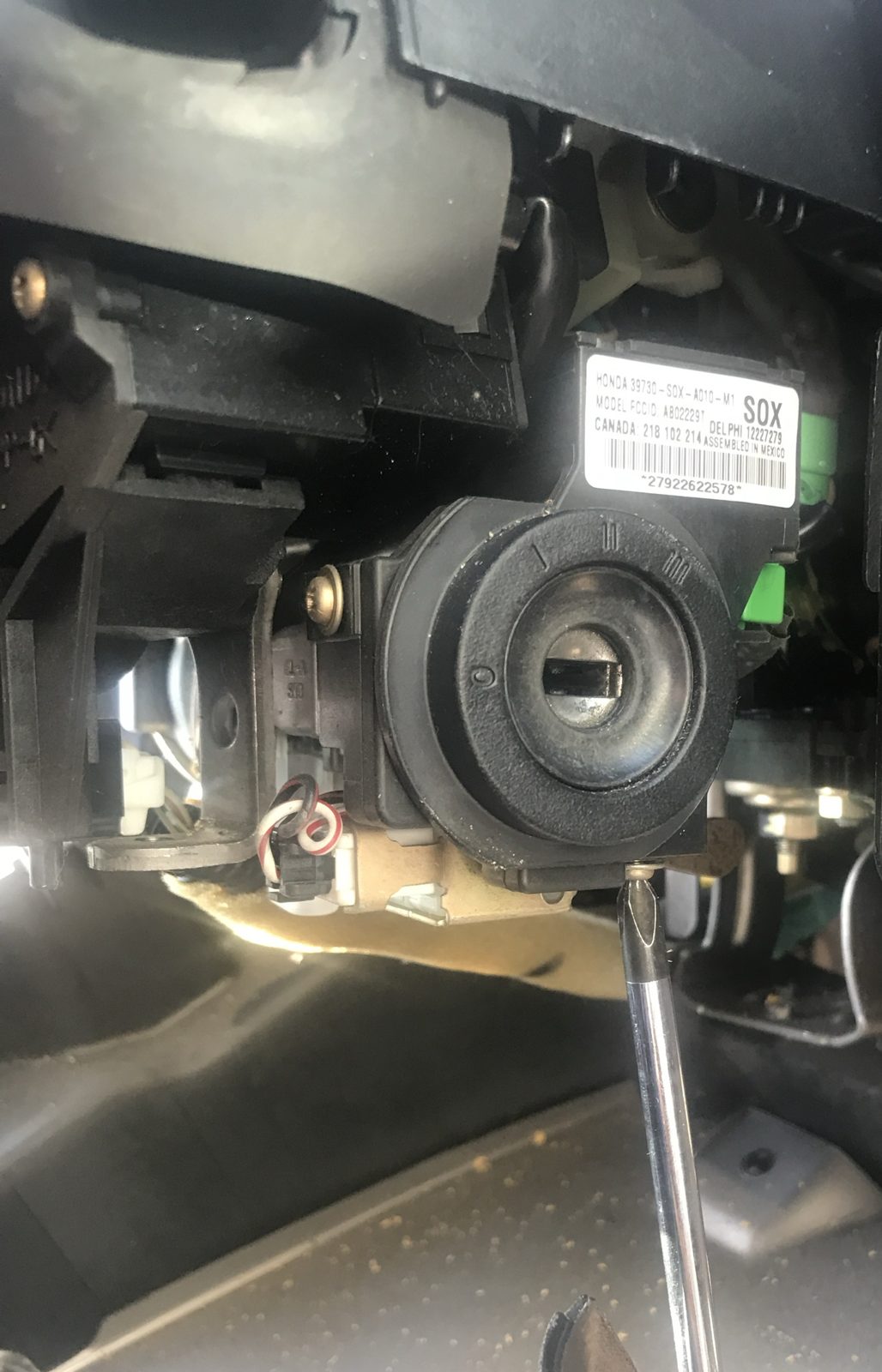
An ignition cylinder out of a Honda steering column during a rebuild at the customer’s car.
Honda and Acura Ignitions
This is a job we do often. Keyed ignitions on the Civic, Accord, CR-V, Odyssey, Pilot, Element and Fit, especially models from the late 1990s through the 2010s, are known for wafer wear. Most Honda ignition repairs run $300 to $400, depending on the model and year. We give you the price on the phone before we drive out, and that is the price you pay. Most jobs take about an hour and a half on site. The full details, including a note on a Honda recall for certain 2003 and 2004 models, are on our Honda ignition repair page.
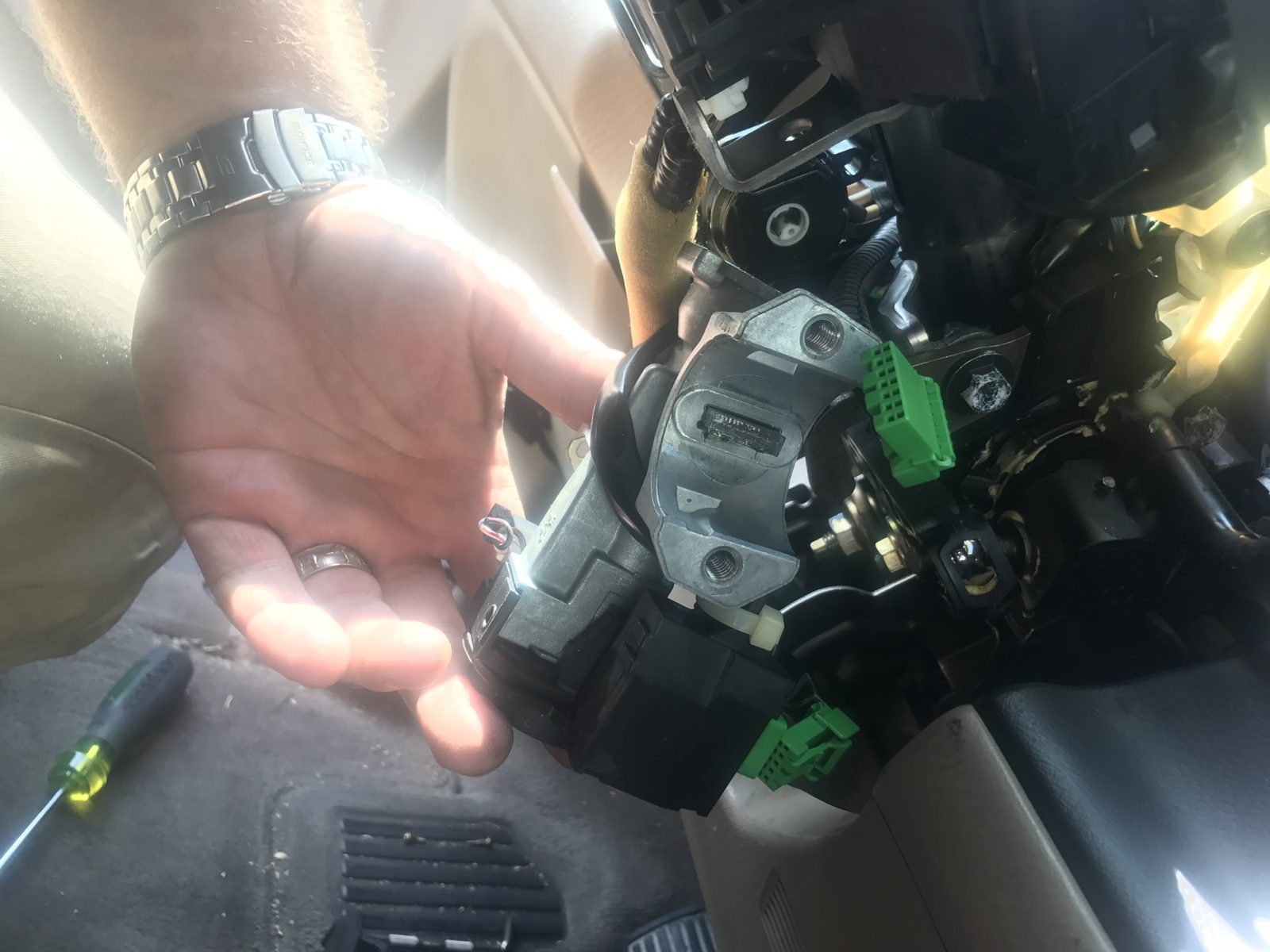
Repairing the ignition housing on site. No tow truck and no dealer appointment.
If you drive another make, call and tell us the year, make and model. We will tell you honestly whether it is a job we do. If the key turns but the car will not start, the problem may be the key’s programming rather than the ignition. Our guide on what to do when a car key will not turn and our page on how car keys get programmed explain the difference.
Dealer, Tow Truck, or Mobile Locksmith?
The dealer route usually means towing the car in, waiting for an appointment, and paying for a part. A mobile locksmith comes to wherever the car is parked, so there is no tow bill and no lost workday. Whichever way you go, get the price before the work starts.
Ignition giving you trouble? Call (602) 301-5243 and tell us the year, make and model. We serve Phoenix, Scottsdale, Tempe, Mesa, Chandler, Glendale, Peoria and Paradise Valley, Monday through Friday, and we quote the job before we head out.